Recent Posts
The Parakeet Holds Still
There is a moment just before a bird moves when it becomes completely legible. Every feather settles. The eye fixes on something. The body gathers into itself. This painting catches a rose-ringed parakeet in exactly that moment — perched, alert, not yet gone.
The painter is working in a mode that owes something to Gauguin and something to Matisse but belongs fully to neither. The sky behind the branches is not blue — it is lavender dissolving into pink, the kind of color that belongs to early evening in a warm climate when the light has gone indirect and the air holds heat without source.
read more
Two Orchids
The magenta one is out of focus and it is still the first thing you see.
That is the photograph’s problem and its solution simultaneously. The purple Phalaenopsis blooms sweep in from the left edge, large and unresolved, occupying a third of the frame as pure color mass. The eye registers saturation before it registers form. Then the yellow orchid asserts itself — fully sharp, cream petals with deep crimson-violet labella at each center, a closed bud still olive-green mid-stem, the whole spike curving through the frame in a line that reads as both botanical and architectural.
read more
White Sails on Blue Water
The Mediterranean does not photograph easily. It resists flatness. Every attempt to compress it into a frame — however wide, however carefully exposed — loses something essential: the way light strikes chop at a low angle and scatters, the textural weight of water that has been moving for ten thousand years. Oil paint handles it better than sensors do.
This painting works because it refuses to simplify. The water is not blue — it is twenty blues, applied with a loaded palette knife in short strokes that echo the actual behavior of Mediterranean chop: restless, directional, never quite still.
read more
The Heartbeat of Wall Street
Standing in the Financial District, you can feel the energy of a city that never stops. The Charging Bull remains one of the most iconic symbols of American optimism and prosperity, drawing crowds from every corner of the globe. Even on a brisk morning, the atmosphere around Bowling Green is electric as visitors gather to capture a piece of New York’s enduring spirit.
The surrounding architecture tells a story of ambition and history, with towering stone facades framing the narrow, cobblestone streets.
read more
The Pulse of American Journalism
American journalism does not run on bylines alone. It runs on the relationships built in hallways, the conversations that happen after the panel ends, and the institutional knowledge passed between reporters who have covered the same beat for decades. PressClub.us exists at that intersection.
The club brings together working journalists, editors, broadcasters, and media professionals under a single mandate: connect, engage, lead. From Capitol Hill correspondents to street-level reporters navigating the urban beat, the membership spans every format and market in the country.
read more
Language Is the Hardest Part of European Identity
Europe has 24 official EU languages and roughly 200 regional and minority languages within its borders. No other political entity of comparable integration has attempted to function across linguistic diversity of this scale. The attempt is either Europe’s most impressive achievement or its most persistent structural problem, depending on what you think language does to identity.
Language is not just a communication tool. It is the container in which a culture’s assumptions, humor, history, and values are stored.
read more
Bauhaus and the Poster: Form Follows Persuasion
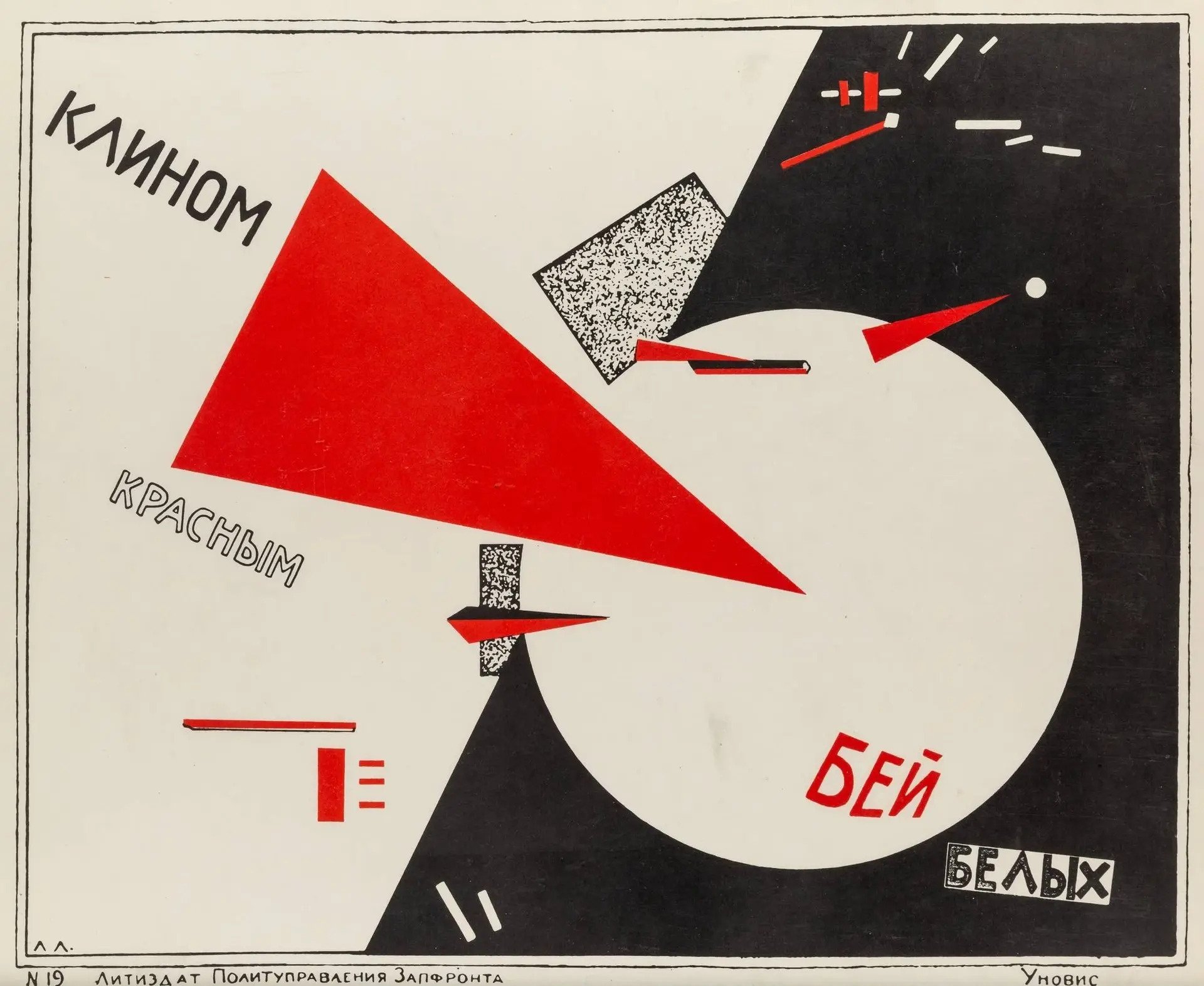
The Bauhaus had an ambivalent relationship with the poster. Founded by Walter Gropius in Dessau in 1919 with the intention of reconciling fine art and craft production, the school’s core pedagogical commitments — truth to materials, functional form, rejection of ornament — did not map cleanly onto a medium whose entire purpose is affective manipulation. A poster that tells the truth about its own conditions of production is not necessarily a poster that works.
read more
Collecting Vintage Travel Posters: What the Market Knows
The vintage travel poster market is old enough to have developed its own pathologies. What began as nostalgic accumulation in the 1970s — former railway employees, tourism board retirees, people who remembered the originals in context — has evolved into a structured secondary market with auction records, condition grading systems, and a small number of dealers who have spent decades building expertise the books don’t contain. Understanding what drives value in this market requires understanding both the history of the objects and the psychology of the people who want them.
read more
How to Frame and Display Posters: A Few Rules the Industry Won't Tell You
The framing industry has a structural incentive to complicate the process of protecting flat paper. Consultations, custom cuts, specialty glass, archival mat boards with competing certifications — by the time you have finished discussing options with a competent framer, you can easily spend three times the cost of the poster on the container. Some of that expenditure is justified. Most of it is not. Understanding which decisions actually matter, and which are elaborations on simpler principles, will save money and produce better results.
read more
Movie Poster Design: From the One-Sheet to the Algorithm
The theatrical one-sheet is 27 by 40 inches. That dimension has been standard since the early twentieth century, sized to fit the display cases outside cinema lobbies. It is one of the most constrained formats in commercial design — fixed proportions, fixed display context, fixed viewing distance — and within those constraints, some of the most inventive image-making of the past hundred years has happened. The current state of the form is less encouraging.
read more